
Dear Mr. Electrician: I am renovating my bathroom and want to add some sort of bathroom heater. What do you recommend?
NOTE: Some links below go to applicable products on Amazon. As an Amazon Associate, I earn from qualifying purchases. Using my links helps to keep this website FREE.
Answer: What bathroom heater is best for you will depend on your bathroom and your personal preferences.
BATHROOM HEATER CHOICES
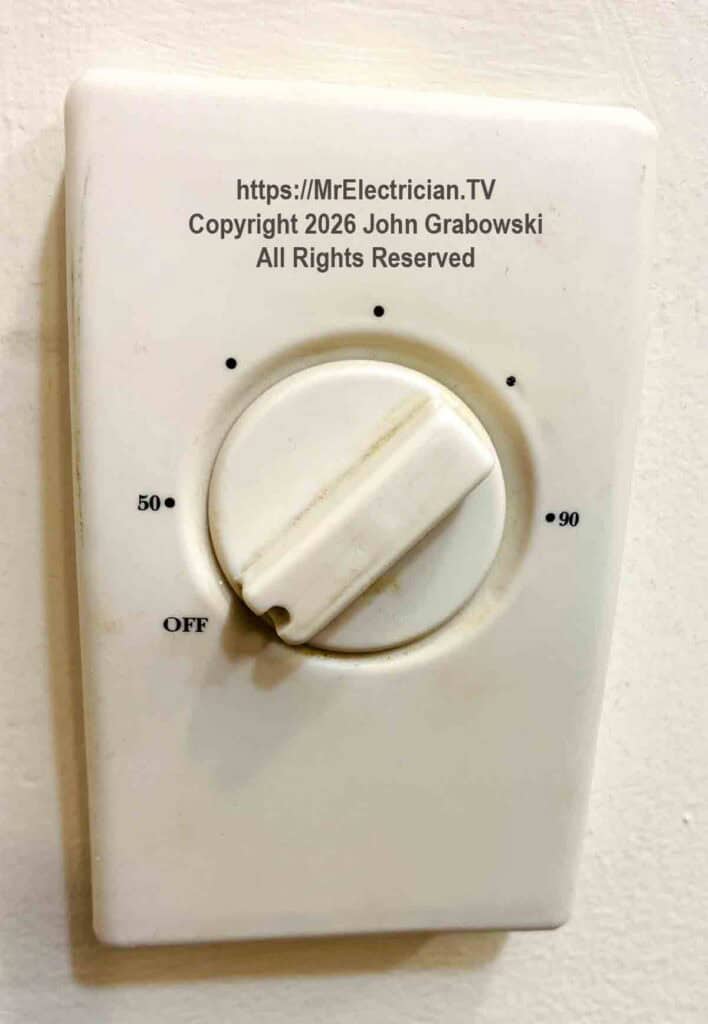
You can have a heater on the ceiling or on the wall. You can have underfloor heating controlled by a wall time switch.
An in-floor heating system produces a nice even heat and feels good on your bare feet. However, it requires the installation of a floor in order for it to be installed and becomes a permanent part of the bathroom structure.
An in-floor bathroom heating system is controlled by a factory furnished wall-mounted time switch/thermostat. You must program the time switch to turn on around 30 minutes or more before you plan to enter the bathroom because it takes that long for the floor to get warm and longer for the entire bathroom to heat up.
It is best if the in-floor bathroom heat is on a dedicated circuit. Check the maximum wattage rating before installing.
This company has a large selection of in-floor heating products.
A ceiling mounted heater is another option for bathroom heating. There are bathroom ceiling heaters that are combined with exhaust fans and lights. They can be controlled by up to three wall switches or timers depending on the number of functions.
A combination fan/light/heater is an easy installation during new construction or a renovation. I haven’t seen any that are made for retrofitting or replacement. This type of heater requires a 20 amp, 120 volt dedicated electrical circuit.
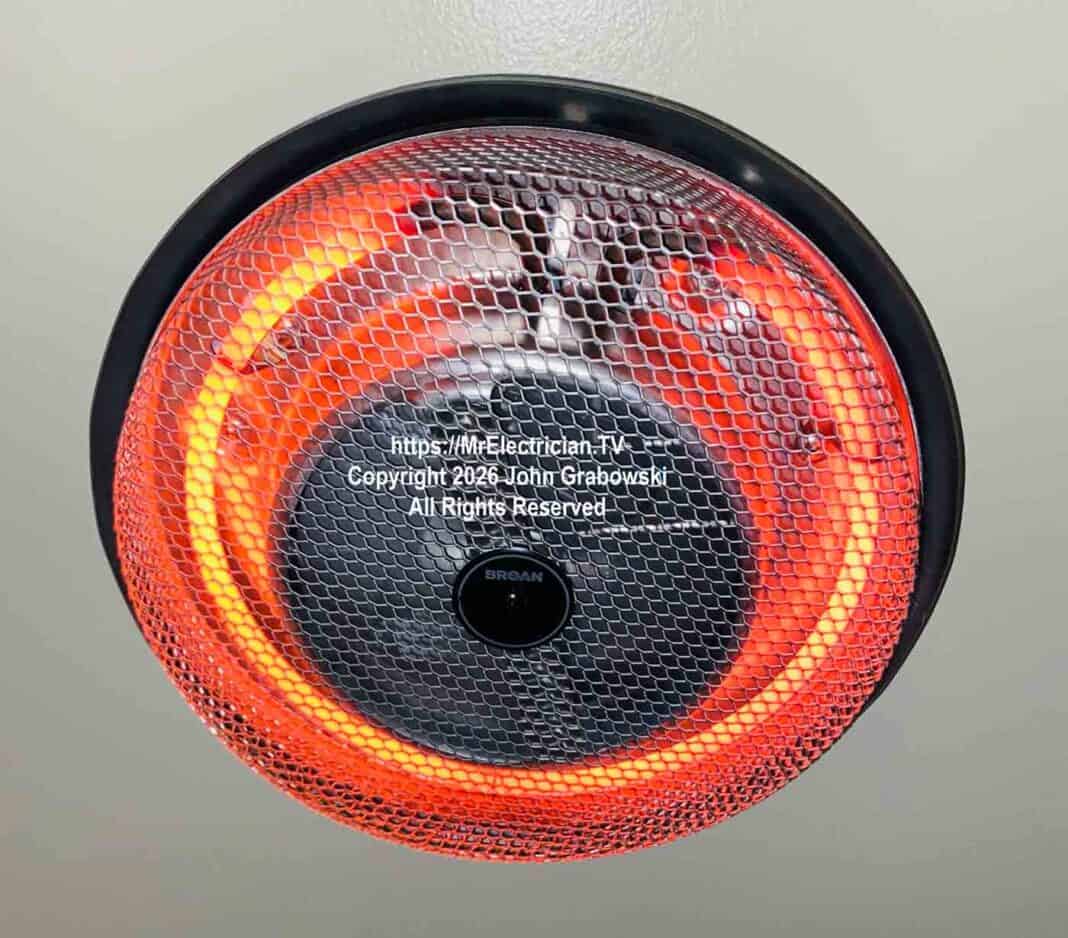
There are other types of ceiling heaters such as the one at the top of this page that can be controlled by a thermostat or a timer to limit the amount of time the heater operates. This type of heater also gives off infrared heat in addition to the fan blowing heat down. The infrared heat feels warm on your skin.
Apparently the Broan 157 ceiling heater is not rated for continuous duty. It can only be used fifteen minutes at a time.
The one thing I don’t like about ceiling-installed fan-forced heaters is that the heat tends to stay close to the ceiling and takes a long time to work its way lower. To make matters worse, the concentrated ceiling heat can be sucked out by the bathroom exhaust fan if it is running at the same time.
I like a bulb heater which gives a feeling of warmth a few seconds after it is turned on. This bathroom heat source is a 250 watt infrared light bulb that heats objects and human skin. It does not warm the air, but it makes you feel warmth.
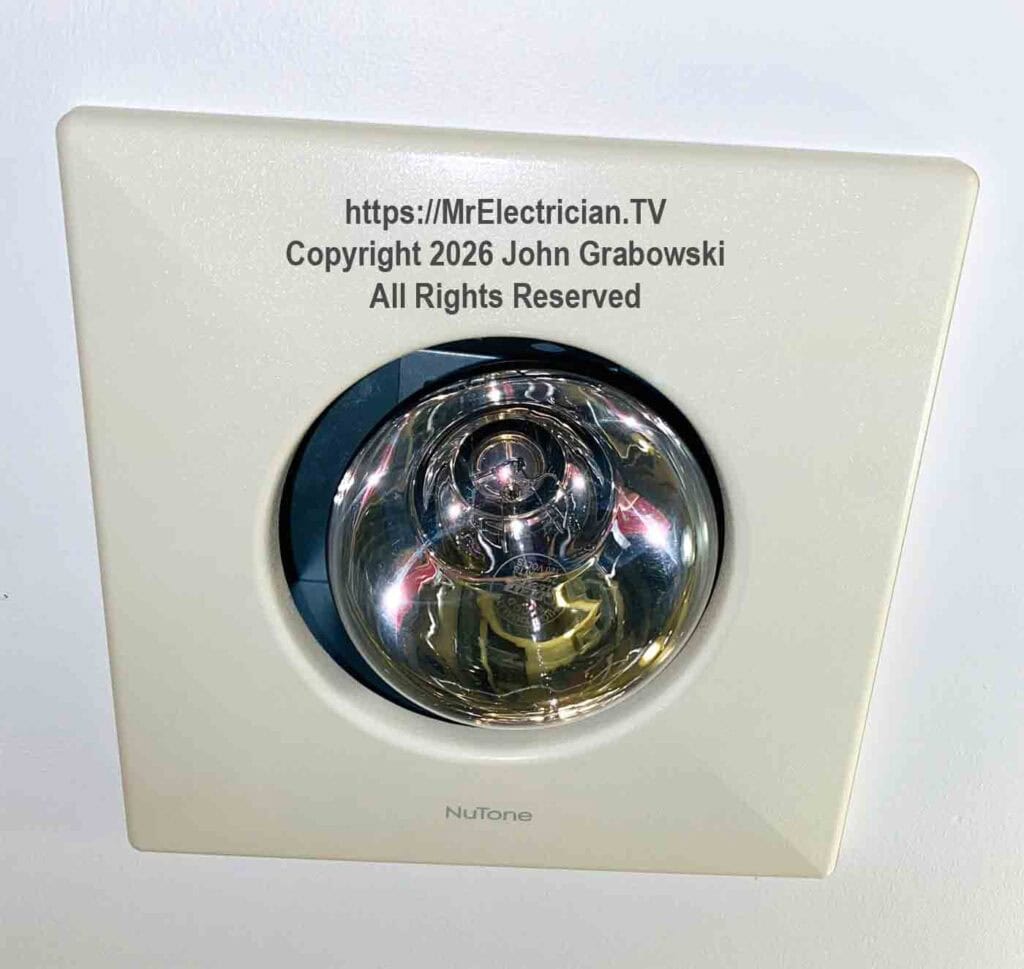
The model that I have is no longer available. However, Nutone makes the bulb heater with a built-in bathroom exhaust fan which cuts down on installation costs. These units usually do not require a dedicated electrical circuit.
WALL MOUNTED HEATERS
A wall mounted bathroom heater can be inside the wall or surface mounted. The choices are fan-forced air or passive radiant heat.
A surface mounted baseboard bathroom heater is a simple installation that has less parts that can possibly go wrong during its lifetime. You can get models with just a heating element or some that are hydronic with a fluid inside to heat up.
Baseboard bathroom heaters are quiet due to no moving parts, however they can make tiny sounds from expansion and contraction as they heat and cool down.
There are models available with a built-in thermostat or you can choose one that is controlled by a wall-mounted thermostat. These need to be on a dedicated heating circuit at 120 volts or 240 volts depending on the baseboard bathroom heater model.
There are many models of wall-mounted fan-forced bathroom and room heaters. Some have their own thermostat while others require a separate wall-mounted thermostat.
Depicted below is a register type in-wall fan-forced heater without a thermostat. Some of these models have variable heat outputs according to certain internal wire connections. A wall thermostat controls the operation on a dedicated electrical circuit.
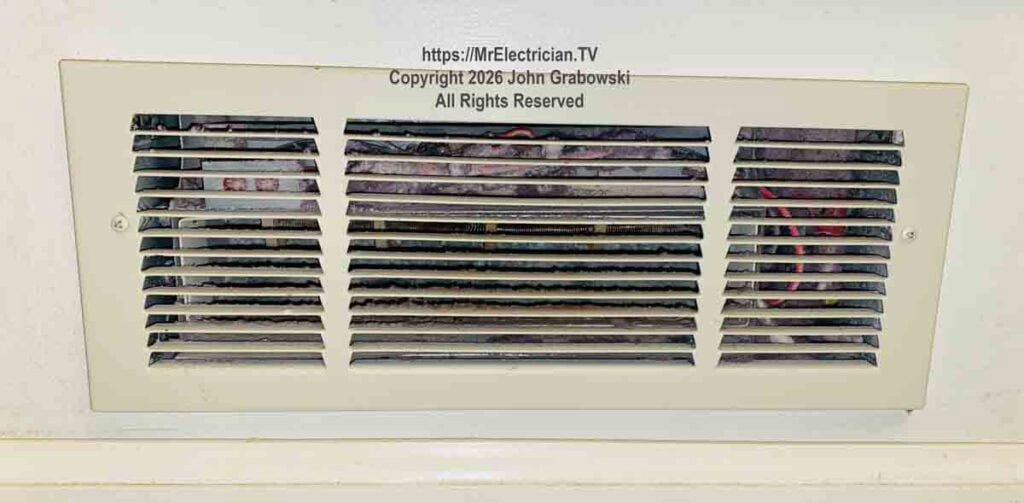
The register bathroom heater can heat a room very quickly if the highest heat setting is chosen during installation. They blow hot air into the room at a lower elevation causing the room air to circulate and get mixed as the heat rises.
Another type of fan forced heater that can be used in the bathroom or a kitchen is a toe kick heater. It is installed in the toe kick on the base of your vanity cabinet. As with other bathroom heaters, some models have built-in thermostats.
These are nice for keeping your feet warm as they blow hot air out at floor level while you are standing in front of the vanity.
Toe kick heaters require a dedicated electric circuit.
One thing about all fan-forced heaters is that each model makes a little noise when operating. The noise will vary by model and manufacturer. Check the Sone ratings for the model that you are interested in. The lower the Sone the quieter the fan.
An electric heated towel rack can provide some supplemental heat in a bathroom but it requires at least thirty minutes to get fully hot. A heated towel rack can also cause minor skin burns, so a towel should be kept on it at all times.
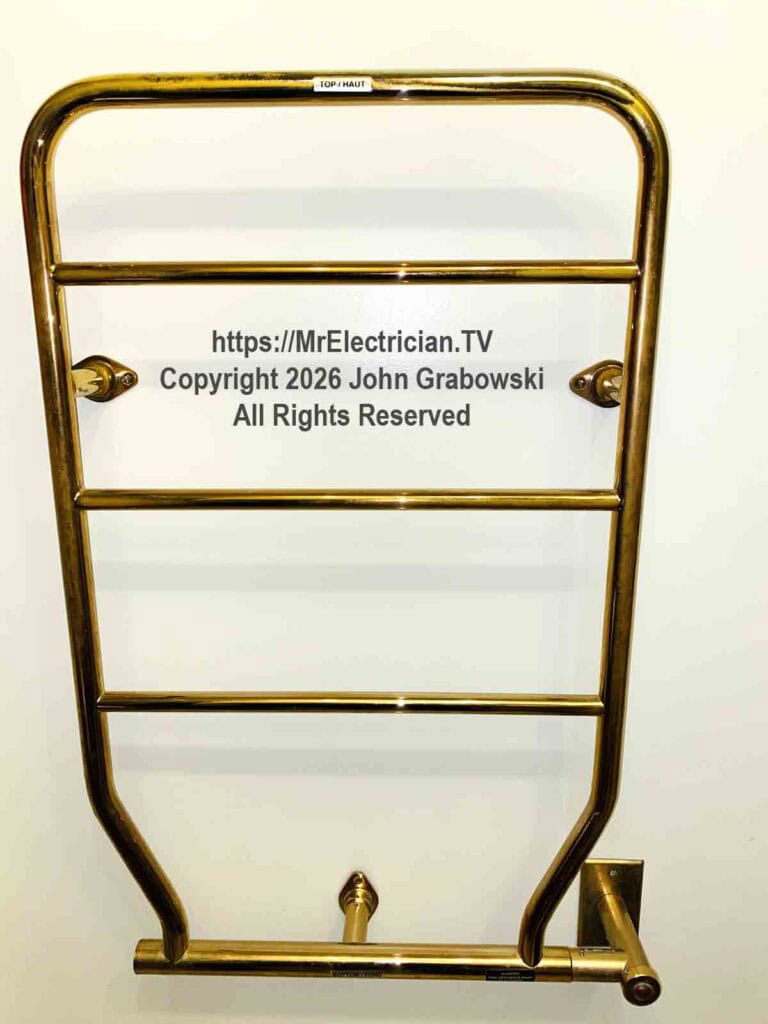
The heated bathroom towel rack above is rated for 135 watts. The heat output is not tremendous. There are other models available with different wattage’s.
There are other models of heated towel racks for bathrooms that get their heat from hot water. They are piped into the home’s hot water baseboard or radiator heat and can provide sufficient room heating while drying towels.
In summary, each of the above heating systems has different costs associated with their installation. An in-floor heating system will require the coordinated services of a floor installer and an electrician. A ceiling heater will need an electrician and perhaps someone to repair and finish the ceiling.
Take the time to plan what is best for your needs and budget. Check to make sure the bathroom heater you are interested in is rated for continuous duty. Read reviews about the product. Go to the manufacturer’s website and read the installation instructions.
You can see all of my bathroom related articles here.
To help keep this website FREE, please use this Amazon link for all of your purchases.
Click for a FREE copy of my book “Almost Everything You Need To Know To Repair a Bathroom Exhaust Fan In Your Home.”
Get your required “Emergency Disconnect, Service Disconnect” labels and stickers to satisfy the 2023 National Electrical Code requirements in article 230.85(E)(1) and (2) by going to my Zazzle Store here.
Visit my Link Tree for social, stickers, and merchandise links.